

 5
Latency 101: Why Physical Data Center Location Still Matters More Than People Assume
 5
Latency 101: Why Physical Data Center Location Still Matters More Than People Assume
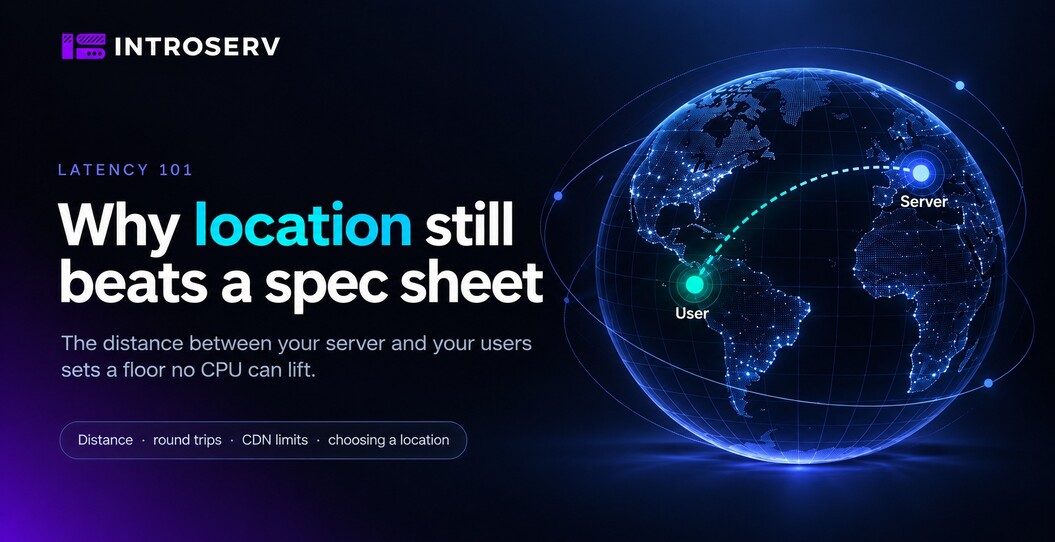
This article explores why data center location remains a critical factor in hosting performance, even when powerful hardware is available. It explains how physical distance creates unavoidable network latency, why faster CPUs and more RAM cannot eliminate transmission delays, and how round-trip time affects the speed users actually experience. The article also highlights why server location should be considered alongside hardware specifications when choosing infrastructure for applications, websites, and other latency-sensitive services.
 5
NVMe vs. SATA SSD vs. HDD: When a Storage Upgrade Actually Pays Off
Business storage upgrades should be evaluated based on return on investment (ROI), not benchmark results, with hardware selected for specific workloads. While NVMe is suitable for latency-sensitive processes, SATA SSDs and HDDs remain cost-effective solutions for general workloads and long-term archiving. More information is available on the INTROSERV website.
 5
Tier III Data Center: What It Means, Requirements, Uptime, and Benefits
Tier III data centers provide an optimal balance of availability, redundancy, maintainability, and cost for business-critical infrastructure. Their defining feature is concurrent maintainability, which allows key power, cooling, and distribution components to be serviced while IT workloads remain online.
 5
NVIDIA vs AMD GPU Servers: How to Choose the Right Platform for Your Workload
A practical comparison of NVIDIA and AMD GPU servers for AI, machine learning, HPC, rendering, and other compute-intensive workloads. Explore the key differences in architecture, GPU memory, software ecosystems, scalability, performance, and cost to understand which platform is the better fit for your infrastructure needs.
 5
Migrating from VMware in 2026: the end of perpetual licenses, vSphere 8 end of support, and replacement options
 5
Komodo vs. Portainer CE: Visual Docker Control and the Choice Between Automation and Versatility